
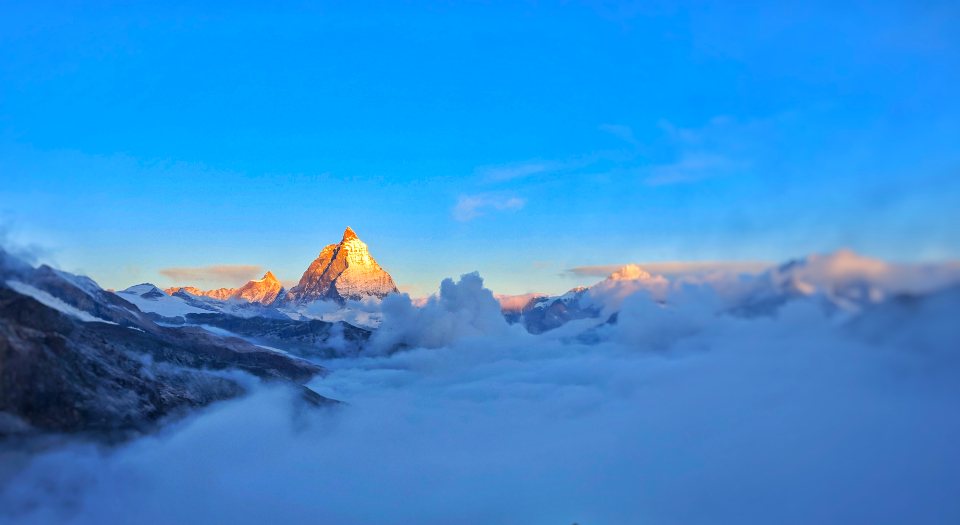
Jotunheimen, the “home of the giants”, holds every one of Norway’s summits above 2,300 m and the two most famous walks in the country: the ridge of Besseggen, which separates a green lake from a blue one, and the ascent of Galdhopiggen, at 2,469 m the highest point in Northern Europe. Both can be done as day walks. Both are better done from the cabins, and the cabin network of Jotunheimen, a mix of staffed lodges, self-service huts and private mountain farms linked by marked trails, is one of the great pleasures of hut-to-hut hiking outside the Alps. This guide describes the two classics and a way of joining them into a week.
How the Norwegian cabin system works
Norway’s trekking cabins come in three kinds, and knowing which is which changes how you pack. The staffed lodges, open in Jotunheimen from late June to early or mid-September, are large timber buildings with dining rooms, drying rooms, made-up beds and a three-course dinner served at a fixed hour; half board is the norm and a packed lunch can be made up from the breakfast table. The self-service cabins are unstaffed but stocked: a locked storeroom holds tinned and dried food, there is a wood stove and gas, and you cook for yourself, record what you have used and pay later. The unstaffed cabins have shelter, bunks and a stove but no food. The second and third kinds are opened with a standard key issued to members of the national trekking association against a deposit, and the honour system underpins the whole network. Bookings at staffed lodges are advisable in July and August; nobody is turned away from a cabin, though late arrivals may sleep on a mattress on the floor.
Besseggen: green lake, blue lake
The Besseggen ridge runs between Gjende, a glacier-fed lake at 984 m whose water is the milky green of rock flour, and Bessvatnet, a clear blue tarn at 1,373 m. The ridge itself is the wall between them, and at its narrowest the path threads a rock crest with the green lake almost 400 m below on one side and the blue lake a few metres below on the other. It is not dangerous in dry conditions and it is not for those who dislike using their hands.
The classic day begins at the lodge at Gjendesheim, at 984 m at the east end of the lake, with the first boat of the morning across to Memurubu, the lodge on the north shore at 1,008 m. The boat runs from roughly mid-June to late September. From Memurubu the walk back east is about 14 km with 1,100 m of total ascent and takes six to eight hours: a steady climb to the shoulder above the lake, the descent to the ridge, the scramble up the crest to the plateau of Veslfjellet at 1,743 m, and a long, stony descent to Gjendesheim. Walking it in this direction means the scramble is taken uphill, which is easier and safer, and the boat timetable is no longer a worry at the end of the day.
Along Gjende to the heart of the range
Instead of turning the Besseggen day into a loop, the walk can simply continue. From Memurubu a second stage follows the north shore of Gjende west to the lodge at Gjendebu, at 990 m at the far end of the lake, a walk of 15 km with a memorable rock step above the water. A third stage climbs north from Gjendebu into the empty interior to the self-service cabin at Olavsbu, at 1,440 m, and a fourth continues to the staffed lodge at Leirvassbu, at 1,400 m beside its lake under the spire of Kyrkja. From Leirvassbu the route drops into the Visdalen valley to the mountain farm at Spiterstulen, at 1,100 m, which is the traditional base for Galdhopiggen. Each of these stages is five to seven hours, mostly on marked paths across boulder fields and snow patches with the occasional river crossing on a bridge.
Galdhopiggen: two ways up
From Spiterstulen the ascent of Galdhopiggen is a straightforward if long mountain walk: 1,370 m of ascent over about 6 km, three to four hours up and two to three down, on a marked path that climbs the flank of the valley, crosses the rocky plateau below Svellnose and Keilhaus topp, and gains the summit by a broad ridge without touching a glacier. The summit carries a small stone hut that serves drinks in high summer, and the view takes in Glittertind, at 2,452 m the second summit of Norway, and the whole tumble of the range.
The other route starts higher, from the lodge at Juvasshytta, at 1,841 m at the end of a toll road, and crosses the Styggebreen glacier. The glacier is flat and gentle but crevassed, and parties are roped and led across it; the crossing is organised on a daily schedule in summer, in general terms, and takes the ascent down to about 630 m and three hours. It is the easier way up in terms of effort and the more instructive one in terms of what a glacier feels like underfoot. From the summit, descending to Spiterstulen means sleeping in the valley rather than at the road.
A week that joins them
- Day 1: Gjendesheim to Memurubu by boat, Besseggen back to Gjendesheim, or stay at Memurubu.
- Day 2: Memurubu to Gjendebu along the lake, 15 km.
- Day 3: Gjendebu to Olavsbu, self-service cabin, 5 to 6 hours.
- Day 4: Olavsbu to Leirvassbu, 4 to 5 hours.
- Day 5: Leirvassbu to Spiterstulen, 5 hours.
- Day 6: Galdhopiggen from Spiterstulen, 7 hours round trip, and out by bus or on foot down Visdalen the next day.
Two things make this week different from an Alpine one. The first is the light: in late June the sun sets after 22:00 and the evening on a cabin veranda goes on and on. The second is the right of access, which allows a tent anywhere on uncultivated land at a reasonable distance from a cabin, so that a walker who finds the lodge full or the price high can simply pitch by the lake. Both options have their case. The lodge dinner wins on comfort; the tent wins on silence; the mountains, either way, are the giants’ own.